
The Lot: Zoning, In-Law Suites and What You Can Build on a House Lot in Stoney Creek and Hamilton
With a detached house, you are buying the land as much as the building. What you can add to it, and what others can do on it, is set by rules the listing rarely explains.
This guide covers lot lines, zoning, suites, regulated land, pools and rural lots, then what to check before you offer. Rules were checked in October 2026.
What you actually own
Lot lines are set by a survey, not by the fence. A Surveyor's Real Property Report shows the lot dimensions, the buildings and any rights-of-way or easements. Ask the seller whether one exists and how old it is.
Many resale purchases close without a new survey. Title insurance is optional in Ontario, and most lenders accept it in place of one. It does not show you where the line is before you build.
An easement gives someone else a right over part of your land, such as a utility easement or a right-of-way for a shared driveway. Your lawyer's title search shows what is registered.
Zoning: the rules attached to the lot
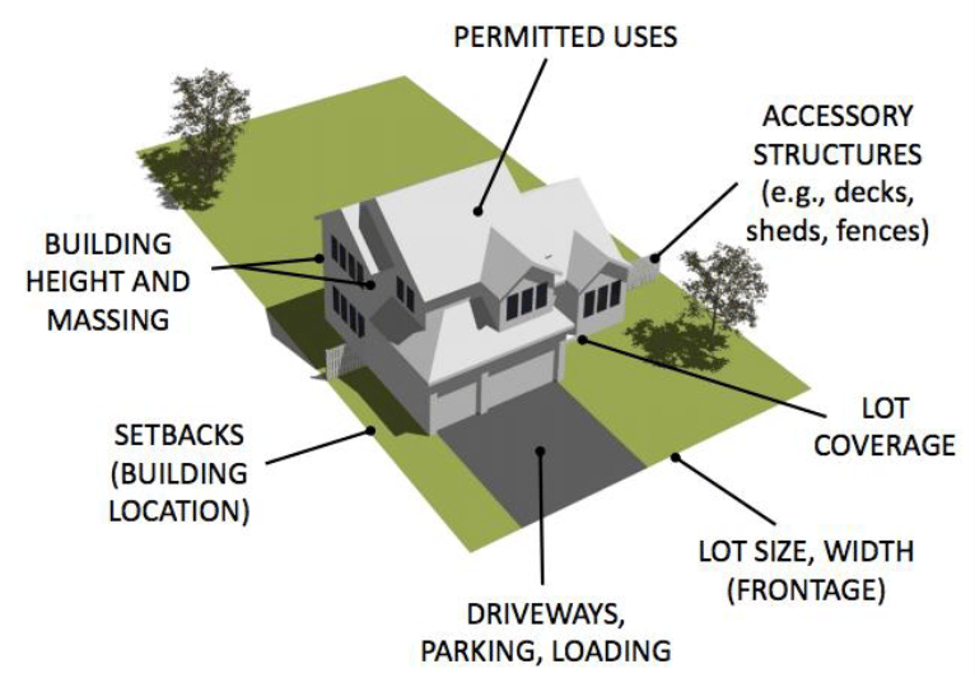
Every lot has a zone. It sets permitted uses, setbacks from the lot lines, building height and lot coverage.
Hamilton has been moving the city into one by-law, Zoning By-law No. 05-200, in stages since 2005. In Stoney Creek, many house lots now carry one of its low density residential zones (R1, R1a or R2), introduced from 2022. Others are still under the former City of Stoney Creek Zoning By-law No. 3692-92 until the city brings them across.
To check a property, enter the address in the city's Interactive Zoning Mapping tool. For confirmation in writing, the city offers a Zoning Compliance Review for a fee.
In-law suites and additional dwelling units
Ontario's More Homes Built Faster Act, 2022 (Bill 23) allows up to three homes on most urban residential lots with municipal water and sewer. Hamilton's By-law 05-200 goes further. A detached house in the urban area can contain up to two additional dwelling units, and the lot can have one detached unit (often called a garden suite) in the rear or interior side yard, to a maximum of four homes. Rural zones are more limited, and not every lot can fit a detached unit.
Every new unit needs a building permit, and the Ontario Building Code sets minimums for fire separation, exits, smoke alarms and ceiling heights.
A listing that says "in-law suite" describes a layout, not a unit built with permits. That matters for:
- Fire safety. An unpermitted unit has not been inspected against the code.
- Insurance. Not disclosing a tenant to your insurer can void a policy.
- Financing. A lender may not count rent from a unit that is not legal. Your mortgage broker confirms this.
- Orders. The fire department can issue an order against an illegal unit, and the owner then needs a permit.
See our post on what to check in an in-law suite home, or browse homes with in-law suites in Stoney Creek.
Escarpment and conservation land
- Niagara Escarpment Commission. Parts of Stoney Creek sit inside its area of development control. There, certain work needs a development permit, including house additions and grade changes. Some smaller projects are exempt.
- Hamilton Conservation Authority. If the lot has a stream, or backs onto a ravine, wetland, steep slope or the Lake Ontario shoreline, part of it may be regulated. Written approval is needed before grading or building there.
Both publish online maps. This matters most for additions, pools, decks and outbuildings.
Pools, fences, decks and sheds
| Project | City of Hamilton building permit |
|---|---|
| Swimming pool | Not for the pool. Required for the enclosure (fence), which every pool must have, at least 1.5 metres high. |
| Fence | Not required unless it encloses a pool. Maximum height is 2 metres on residential lots. |
| Deck | Required if attached to the house or used with a pool, and for some larger detached decks. |
| Shed or detached garage | Required when larger than 15 square metres. |
Rural lots: well and septic
A house not on city water and sewer relies on a private well and septic system, both the owner's responsibility. The city recommends testing well water at least three times a year and encourages a septic inspection every three to five years. Have both inspected before you buy. See our home inspection guide.
How to check before you offer
- Look up the zoning on the city's map.
- Ask whether any suite was built with permits, and ask for the paperwork.
- Ask whether the seller has a survey.
- Have your lawyer review title.
- Call the city, conservation authority or Escarpment Commission about your specific plan.
If the purchase depends on a plan (suite rent, a pool, an addition), confirm it before the deal is firm. Our guide to making an offer explains conditions.
Who needs to be most careful
- Buyers counting on rent from a suite. An unpermitted suite is not right for you if your numbers only work with that rent.
- Buyers planning a pool or an addition.
- Buyers of rural, escarpment-edge or creek-side lots.
Lot types vary by area. See our Stoney Creek neighbourhoods comparison.
Browse houses for sale
- Houses for sale in Stoney Creek
- Houses for sale in Stoney Creek Mountain
- Houses for sale in Fifty Point
Frequently Asked Questions
How do I find the zoning for a house in Stoney Creek or Hamilton?
Enter the address in the City of Hamilton's Interactive Zoning Mapping tool. It shows the zone code and the by-law that applies.
Is an in-law suite the same as a legal second unit?
No. "In-law suite" describes a layout. A legal unit was created with a building permit and meets the zoning by-law.
How many units can I have on a house lot in Hamilton?
Under Zoning By-law 05-200, as of October 2026, a detached house in the urban area can have two units added inside and one detached unit, to a maximum of four on the lot. Confirm the zoning for the specific lot.
Do I need a permit for a pool in Hamilton?
Not for the pool itself. You need a building permit for the pool enclosure (fence).
Do I need a new survey to buy a house in Ontario?
Usually not. Most lenders accept title insurance instead, but only a survey shows where the lot lines are.
Want to talk through the zoning or a building plan for a specific house? Get in touch and we will go through it with you.
This is general information, not legal, planning or mortgage advice. By-laws and permit rules change, so confirm the details for a specific property with the City of Hamilton and your lawyer.