
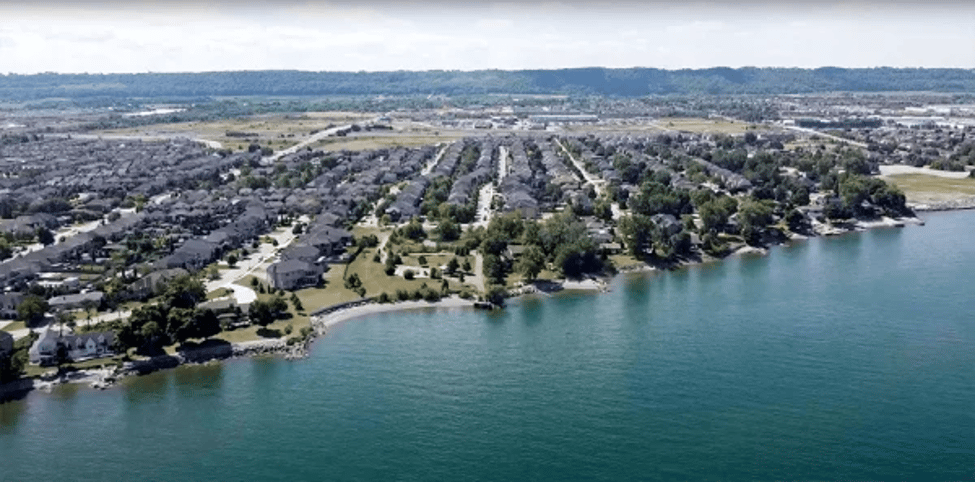
Escarpment, Lakefront and Conservation Rules in Stoney Creek and Hamilton
The lots with the best views often carry the most rules. A buyer paying for an escarpment or lake view usually has a plan (a pool, an addition, a larger garage, fewer trees), and here the City is not the only body that decides.
This guide covers each layer, who runs it, and how to check a lot before you offer. For the settings themselves, see where houses over $1 million are found.
The layers at a glance
| Layer | Who administers it | Where it typically applies | What it can affect |
|---|---|---|---|
| Niagara Escarpment Plan | Niagara Escarpment Commission (NEC) | Land on and near the escarpment | New houses, additions, grading, new lots |
| Conservation authority regulation | Hamilton Conservation Authority (HCA) or another authority | Ravines, creeks, wetlands, the lakeshore, and land beside them | Additions, pools, decks, grading, shoreline works |
| Greenbelt Plan | The Province, through the City's rural official plan | Rural Hamilton | Severances, non-farm uses |
| Tree by-laws | City of Hamilton | Woodlands and some other private land | Cutting or injuring trees |
| Heritage designation | City of Hamilton | Designated properties | Alterations to heritage features |
The Niagara Escarpment and the NEC
The provincial Niagara Escarpment Plan names the City of Hamilton, including the former Stoney Creek, Ancaster, Dundas and Flamborough, among the municipalities with land in it. It sorts land into seven designations, each with different permitted uses.
Part of the Plan area is also an "area of development control". There, certain kinds of development need an NEC development permit, and municipal building permits can only be issued after it.
Some smaller projects are exempt under Regulation 828, with conditions. The NEC lists pools, decks, additions and accessory buildings among the categories that can qualify. The Province amended that regulation in 2026, so read the current version. The NEC does not confirm exemptions by letter.
Ravines, creeks, wetlands and the conservation authority
Since April 1, 2024, Ontario Regulation 41/24 under the Conservation Authorities Act has replaced each authority's own regulation. HCA regulates ravines and valleys (including parts of the escarpment), wetlands, creeks, floodplains, the Lake Ontario shoreline and land adjacent to them.
There, you need HCA's written approval before building, grading or placing fill. Four conservation authorities have jurisdiction in Hamilton, so confirm which one covers the lot.
The Lake Ontario shoreline
HCA's shoreline plan defines a flooding hazard (the 100-year lake level plus an allowance for waves) and an erosion hazard. Development is generally not permitted within them, so a house, pool or addition has to sit back from the hazard limit.
Do not assume who maintains the shoreline protection in front of a house. Ask the seller for permits and engineering reports, and ask HCA and your lawyer who is responsible. Our flood risk guide covers water at the house itself.
Rural land, trees, heritage and zoning
- Greenbelt. Hamilton's rural official plan protects the tender fruit and grape land identified by the Greenbelt Plan, between Lake Ontario and the escarpment in the Winona area. The Plan discourages new lots, sets a 16 hectare (40 acre) minimum for farm severances in these specialty crop areas, and does not permit most non-farm uses there. See our guide to custom-built houses and estate lots.
- Trees. The Urban Woodland Conservation By-law requires a permit to injure or destroy trees in a woodland of 0.2 hectares or more inside the urban boundary. Older by-laws from the former Stoney Creek, Ancaster and Dundas cover other trees, and the Stoney Creek one applies to private land in the escarpment development control area. The City consulted in 2026 on replacing them, so check with the City before removing a tree.
- Heritage. Under the Ontario Heritage Act, altering a designated property in a way likely to affect its heritage attributes needs a Heritage Permit before the City will issue a building permit. Ask whether the house is on the City's Municipal Heritage Register.
- Zoning. A separate check, covered in our lot and zoning guide.
How to check before you offer
- Look at the public maps. The NEC's interactive map (for illustration only) shows the Plan area, development control and designations. HCA has a regulated areas map tool.
- Contact the agency with your plan. The NEC suggests this before buying. Its staff cannot guarantee approval in advance.
- Ask the seller for past permits for the pool, additions, grading and shoreline works.
- Use a condition that gives you time to confirm the plan. See our guide to making an offer on a house over $1 million.
Your lawyer confirms what applies to the lot. For a larger project, a planner advises on what is likely to be approved.
Who should be careful
Anyone buying for a planned change: a pool, an addition, a rebuild or tree clearing. If the purchase only makes sense with that change, a general answer is not enough. A neighbour's pool or addition does not prove yours would be allowed. It may predate the rules or sit under a different designation.
Browse luxury homes for sale
- Luxury homes for sale in Stoney Creek
- Luxury homes for sale in Stoney Creek Mountain
- Luxury homes for sale in Fifty Point
- Luxury homes for sale in Hamilton
Frequently Asked Questions
Do I need an NEC permit for a pool in Stoney Creek?
Only in the NEC's area of development control. There, a pool needs a development permit unless it meets the exemption conditions in Regulation 828.
How do I check if the Hamilton Conservation Authority regulates a property?
Use HCA's regulated areas map tool, then contact HCA to discuss your plan.
Can I cut down trees on my own property in Hamilton?
Not always. Trees in a woodland need a permit, and older by-laws cover some other trees. Ask the City first.
Can I sever a Greenbelt lot in Hamilton?
Not easily. The Greenbelt Plan discourages new lots and allows them only in limited cases.
Does an NEC development permit replace a building permit?
No. The building permit comes after it, and other approvals, such as a conservation authority permit, may still be needed.
Want to talk through the rules for a specific lot? Get in touch and we will go through it with you.
General information as of October 2026, not legal or planning advice. Rules, mapping and by-laws change, so confirm what applies to a property with the agency, your lawyer and a planner.