
Wet Basements and Flood Risk: What to Check Before You Buy a House in Stoney Creek or Hamilton
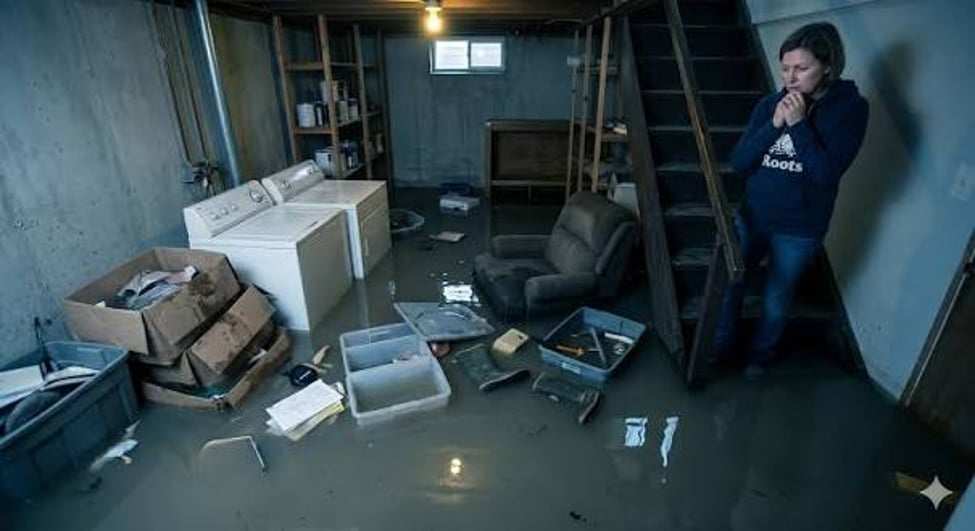
Water in the basement is one of the most expensive surprises a house owner gets. It is also easy to miss at a showing, because a dry week and a coat of paint hide a lot.
This guide covers the three ways water gets in, what to look for and ask, the City of Hamilton grant, how to check for a regulated flood area, and why an insurance quote belongs in your condition period.
Three ways water gets into a basement
| Type | Usual cause | Usual protection | Standard home insurance |
|---|---|---|---|
| Seepage | Groundwater or rain coming through the foundation walls or floor, often because the ground slopes toward the house or downspouts empty beside it. | Grading that drains away, longer downspouts, a sump pump. | Typically not covered. |
| Sewer backup | Heavy rain overloads the sewer and water comes up through the basement drains. | A backwater valve, which closes the sewer line during heavy rain. | Typically not covered. Most insurers sell it as an option. |
| Overland flooding | Water arriving at ground level from an overflowing creek or lake, or from heavy rain or snowmelt. | Mostly the location and the lot. | Typically not covered. The option depends on the address. |
What to look for and what to ask
- Low on the walls. Stains, a tide line, white powdery deposits on concrete (efflorescence), or fresh paint on the lower part of a wall only.
- The air. A musty smell, or a dehumidifier running.
- A finished basement. Drywall and flooring hide the foundation from you and from the inspector.
- The equipment. A sump pump (ask about a battery backup) and a backwater valve (ask when it was last serviced).
- Outside. The ground should slope away from the house. The Insurance Bureau of Canada (IBC) suggests downspouts reach at least six feet from the basement wall.
Ask the seller, in writing, whether the basement has ever had water or a sewer backup, whether an insurance claim was made, and what was repaired. RECO, Ontario's real estate regulator, says a seller must disclose latent defects, meaning hidden defects that make a property unfit to live in or dangerous. A seller does not have to point out a defect a buyer or inspector could reasonably find. Whether an old water problem counts depends on the facts, and a lawyer confirms that.
An inspector looks for these signs but cannot open walls, as our home inspection guide explains. Repair costs vary widely with the cause, so get a contractor's written quote before your offer is firm.
Hamilton's sewers and the City grant
The City of Hamilton says it has a large combined sewer system, where one pipe carries both sewage and stormwater. In sudden, heavy rain those sewers can reach capacity, which raises the risk of basement flooding. Combined sewers are found in older parts of the city. Newer areas have separate storm and sanitary sewers.
The City's Protective Plumbing Program (often called 3P) helps owners pay for protection. From the City's 2026 forms:
- Grant. Up to $2,000, plus the building permit cost, toward a backwater valve and downspout disconnection.
- Who qualifies. Owners of a single family home built before January 1, 2012, connected to the City sewer, with property taxes up to date.
- Once per property. A house that already received the backwater valve grant cannot get it again, so ask the seller.
- Contractor. Use one from the City's pre-qualified list, or the grant drops to $500.
- Loan. A separate City loan of up to $2,000 at 4 per cent, repaid over 10 years.
Stoney Creek is not exempt. After the storm of July 26, 2009 caused flooding in part of Stoney Creek, the Hamilton Conservation Authority carried out a flood and erosion study of Stoney Creek and Battlefield Creek. Risk varies street by street, more finely than our Stoney Creek neighbourhoods guide can show, so check each address.
Flood plains and regulated areas
The Hamilton Conservation Authority (HCA) regulates land in and beside creeks, flood plains, wetlands, ravines, parts of the Niagara Escarpment and the Lake Ontario shoreline. It does this under Ontario's Conservation Authorities Act and Ontario Regulation 41/24, in force since April 2024. In Stoney Creek, both Stoney Creek and Battlefield Creek run from above the escarpment down to the lake.
HCA has an online Regulated Area Map Tool. Look up the address before you offer. A regulated lot does not mean the house floods. It does mean more questions, and an HCA permit for work such as an addition, pool, deck or regrading. Our guide to the lot and zoning covers what else limits a property.
Insurance: get a quote on the exact address
IBC says a standard home policy typically does not cover sewer backup or overland flooding. Each is an optional add-on. In July 2026, IBC reported that about 94 per cent of Canadian homes are eligible for overland flood coverage. The rest tend to be in high-risk areas where it is unavailable or unaffordable. Some insurers offer incentives for a backwater valve or sump pump.
Call an insurance broker with the address during your condition period. Ask for a quote that includes sewer backup and overland water coverage.
Who should be most careful
- Buyers counting on the basement. If you are paying for a finished basement or an in-law suite, water damages more. The City grant is also closed to owners in the process of adding a secondary dwelling unit.
- Buyers of older houses on low ground, beside a creek or near the lake.
- Buyers waiving the inspection condition. Do the map check and the insurance call before you offer.
A past water problem with a documented repair is not, on its own, a reason to walk away. An unexplained one is a reason to slow down.
Browse houses for sale
- Houses for sale in Stoney Creek
- Houses for sale in Stoney Creek Mountain
- Houses for sale in Fifty Point
Frequently Asked Questions
Does home insurance cover a flooded basement in Ontario?
Often not by default. IBC says sewer backup and overland flooding are typically excluded from a standard policy and sold as optional coverage.
What is a backwater valve?
A device on the house's sewer line that closes during heavy rain, so water from an overloaded sewer cannot come back into the basement.
Does the City of Hamilton pay for a backwater valve?
Partly. The Protective Plumbing Program offers eligible homeowners up to $2,000 plus the building permit cost (checked October 2026 against the City's 2026 forms).
How do I find out if a house in Stoney Creek is in a flood plain?
Look up the address on the Hamilton Conservation Authority's Regulated Area Map Tool, or contact HCA's permits staff.
Does a seller have to disclose a wet basement in Ontario?
RECO says sellers must disclose latent defects. Whether a past water problem qualifies depends on the facts, so ask directly and have a lawyer advise.
Want to talk through the flood risk for a specific house? Get in touch and we will go through it with you.
This guide is general information, not legal, insurance or building advice. Programs, rules and coverage change, so confirm the details with the City of Hamilton, your lawyer, your insurance broker and your inspector.