
Townhouse Parking, Yards and Rules in Stoney Creek and Hamilton
A townhouse listing rarely says where a second car goes, how you reach the backyard, or what you can change.
This guide covers parking, the yard, rules on changes, renting, and what to check before you buy. Rules were checked in October 2026.
Parking: count the spaces
Many townhouses have a single-car garage and a single driveway. Check:
- The garage. Measure it against your vehicle.
- The driveway. Count how many cars fit clear of the sidewalk.
- Visitor parking. In condo and common-element developments it belongs to the corporation, which sets the rules.
The street is not a second space. Under Hamilton's on-street parking by-law, a vehicle cannot stay parked on a city street for more than 12 hours, or 4 hours for a commercial vehicle not registered for personal use. Parking is banned on signed snow routes during a declared snow emergency. Some streets have shorter posted limits. Private roads in a condo development follow the corporation's rules.
Widening the driveway is not simple. The City must approve a wider access across the boulevard, and zoning sets the width.
The yard
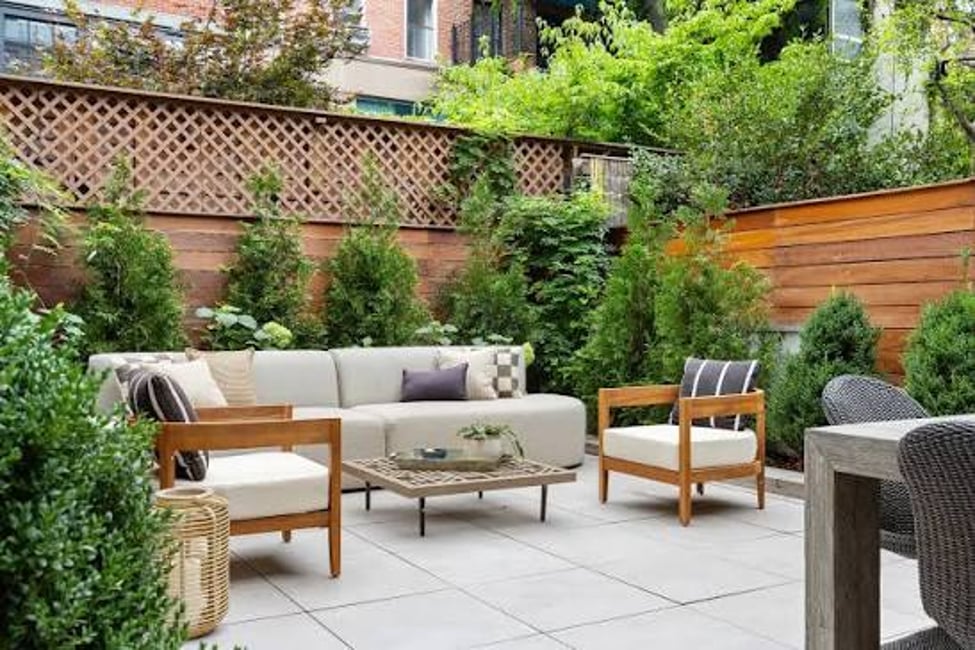
Townhouse yards are narrow. With an interior unit, the only way into the backyard may be through the house or garage, or by a rear access easement.
- Fences. Hamilton's Fence By-law caps height at 2 metres, and at 0.9 metres within 3 metres of the front lot line.
- Sheds. Under the Ontario Building Code, a detached one-storey storage shed of 15 square metres or less, with no plumbing, does not need a building permit. Zoning still applies.
- Decks. The City has a building permit process for decks. Ask before you build.
In a condo townhouse, the yard may be an "exclusive use common element": the corporation owns it and only your unit may use it. The declaration lists these areas. See our guide to freehold, condo and common-element townhouses.
Rules about what you can change
Freehold. City by-laws apply, plus anything registered on title, such as a builder's restrictive covenants or an easement. See our guide to shared walls and who fixes what.
Condo and common-element. The declaration, by-laws and rules can cover exterior appearance, satellite dishes, storage, pets, renting and short-term rentals. Under the Condominium Act, 1998, rules must be reasonable. An owner who wants to alter a common element, including an exclusive use yard, generally needs board approval and a section 98 agreement. See our guide to condo rules on parking, pets and rentals.
EV chargers in condos. Ontario Regulation 48/01 sets the process. The owner applies in writing, the corporation has 60 days to respond, and it can refuse only on limited grounds such as safety. The owner generally pays.
Renting out part of the home
Where it applies, Hamilton's Zoning By-law 05-200 permits additional dwelling units in a street townhouse in the urban area. How many depends on the lot and the by-law's conditions, so confirm with the City. A street townhouse sits on its own lot facing a public street. Every new unit needs a building permit, and a condo declaration can still prohibit one. See our lot and zoning guide.
Short-term rentals need a City licence, which covers only your principal residence. A condo corporation can restrict or ban them.
Freehold or condo: who decides
| What you want to do | Freehold townhouse | Condo or common-element townhouse |
|---|---|---|
| Park a second car | Your driveway. City by-laws govern the street. | The declaration and rules decide. |
| Build a deck | City permit rules and zoning. | Board approval if the yard is a common element, then the City. |
| Put up a fence | Fence By-law, plus any covenant on title. | The condo documents decide. |
| Install an EV charger | Your decision. | Written application to the corporation. |
| Rent out the basement | Zoning and a building permit. | The same, if the declaration allows it. |
How to check before you buy
- For a condo or common-element townhouse, have your lawyer review the status certificate, which includes the declaration, by-laws and rules. See our status certificate guide.
- For a freehold, ask your lawyer what is registered on title.
- Ask the City about any plan before the deal is firm.
Who should be careful
- Households with two or more vehicles, or a work truck. Zoning limits commercial vehicles parked on a residential lot.
- People planning a home business with client parking. Zoning and condo documents set limits.
- People who want to rent out part of the home. A condo townhouse is not right for you if the declaration does not allow a tenant.
- People with a boat or trailer. Zoning limits storage of trailers and recreational equipment, and condo rules may be stricter.
Browse townhomes for sale
Frequently Asked Questions
How long can I park on the street in Hamilton?
The City's parking by-law sets a maximum of 12 hours on city streets, less where signs say so. Confirm the current rules with the City.
Can I widen my townhouse driveway in Hamilton?
A wider access across the boulevard needs City approval, and zoning limits the width. In a condo development, the corporation decides.
Do I own the backyard of a condo townhouse?
Not always. It may be an exclusive use common element owned by the corporation.
Can I add a basement apartment to a townhouse in Hamilton?
By-law 05-200 permits additional units in urban street townhouses, with a building permit. A condo declaration can prohibit it.
Can a condo corporation refuse an EV charger in Ontario?
Only on limited grounds. It must respond to a written application within 60 days.
Want to talk through the parking or rules for a specific townhouse? Get in touch and we will go through it with you.
This is general information, not legal or planning advice. By-laws and condo documents change, so confirm the details for a specific property with the City of Hamilton and your lawyer.